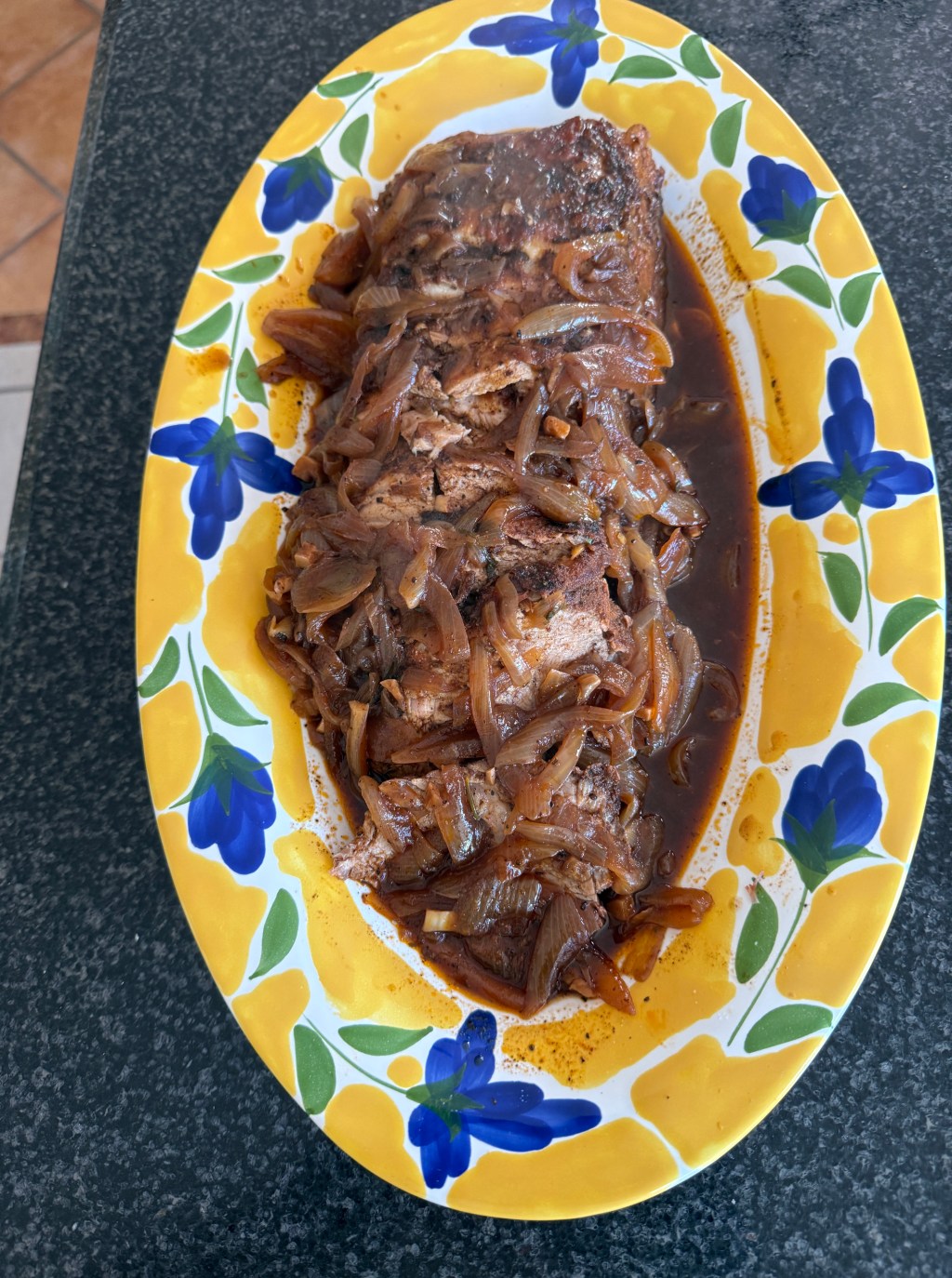
So, my wife’s friend Gidget asked the question “Why isn’t he posting more recipes?” OK… Challenge Accepted.
Even before beef prices rose to levels that qualify for a home mortgage, I’ve always thought that more humble (meaning cheaper) cuts of meat can be more interesting. That Tomahawk Steak – nope, I see no reason.
Even so, this recipe is not about the meat (I leave that to Arby’s); it is in fact about the onions. I’ve used this with chicken quite successfully and can probably do it with other types of protein but have yet to try. In my thinking, one comes up with a technique and then applies it in different ways.
So, with that background I think we can all agree that Gidget needs to try this and report back. (And, really, it’s nice to hear that someone likes these recipes, so just let me know what might be interesting.)
Ingredients:
- 3-4 lbs. Pork Loin Roast (see Variations)
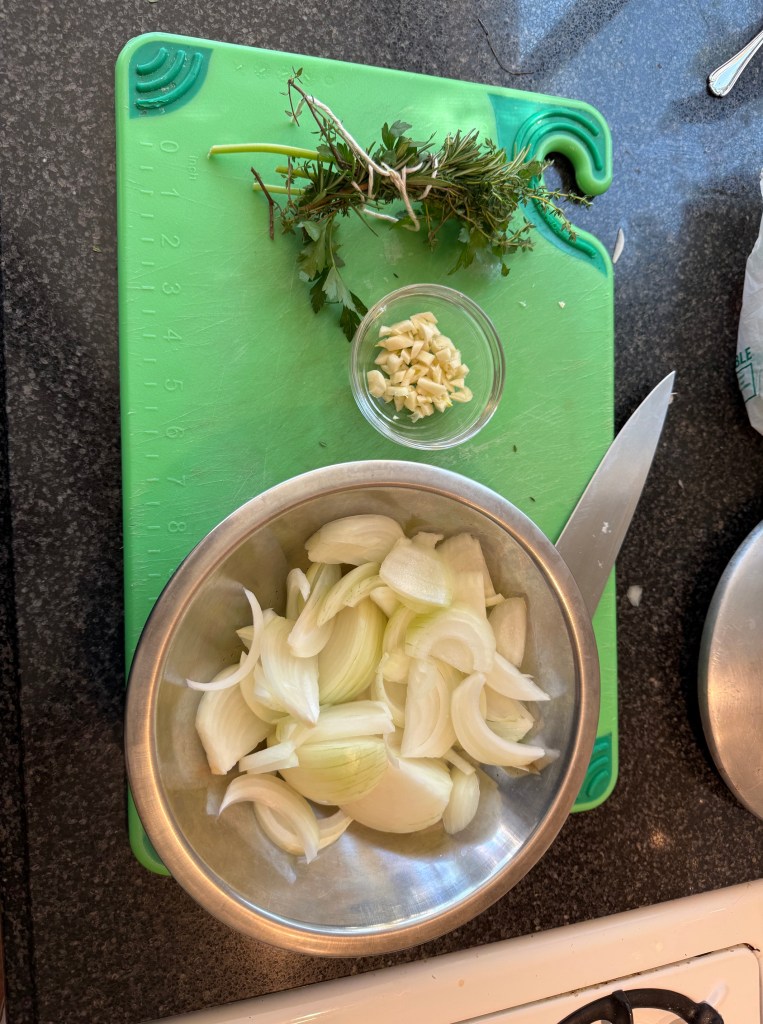
- 2 medium onions, sliced
- 3-4 cloves garlic, roughly chopped
- 1 ½ -2 tbsp. tomato paste (I use the stuff in the tube)
- Bouquet Garni, bay leaves or dried oregano (see below)
- 1 cup red wine
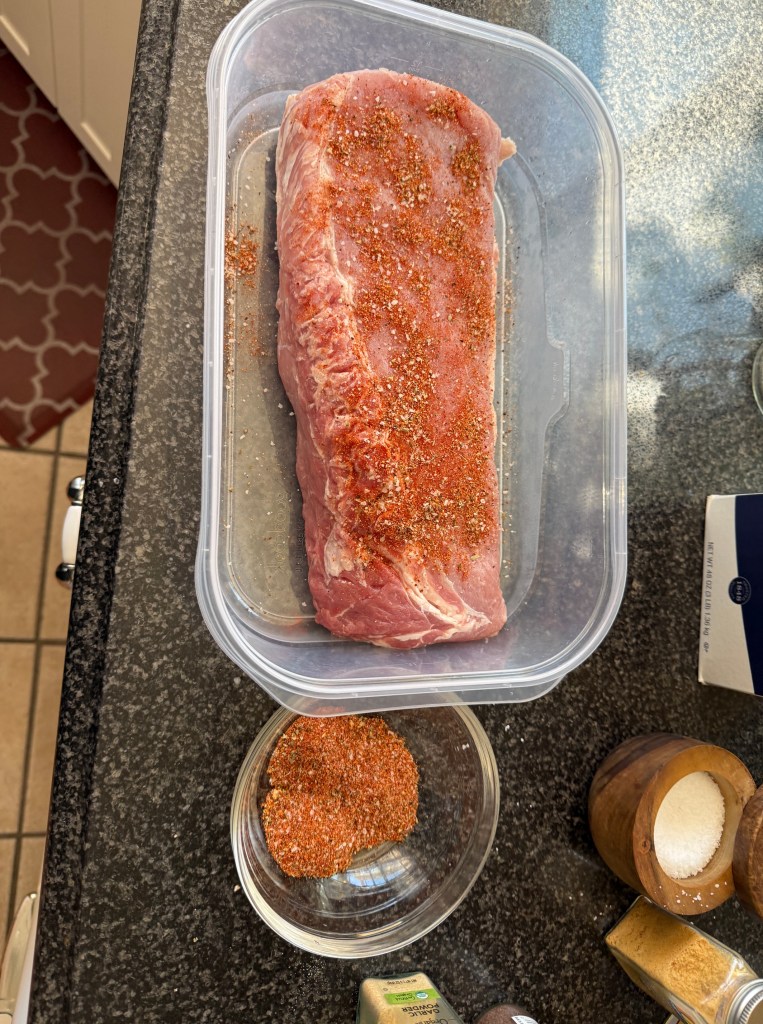
- 1/3 cup dry rub
Pork Rub
First, you may want to use any type of rub that you like. Go for it. I tend to make up a rub based on whatever I think is interesting that day. But, just for you, this time I actually got out measuring spoons. You’re welcome. Here’s what I used (this time….)
- 1 ½ tsp pepper
- 1 tbsp. salt
- 1 tsp ground mustard
- 1 tsp sumac
- 2 tsp smoked paprika
- ½ tsp cayenne
- 1 tsp granulated garlic
- 1 tsp dried oregano
Some thoughts:
You’ll see that the rub I use for this recipe has no sugar. The onions provide that once they’ve cooked through.
I have also done this where I sub out sumac and some of the paprika for dried chile powder (I like ancho chile but choose what you want).
Pork Roast Recipe
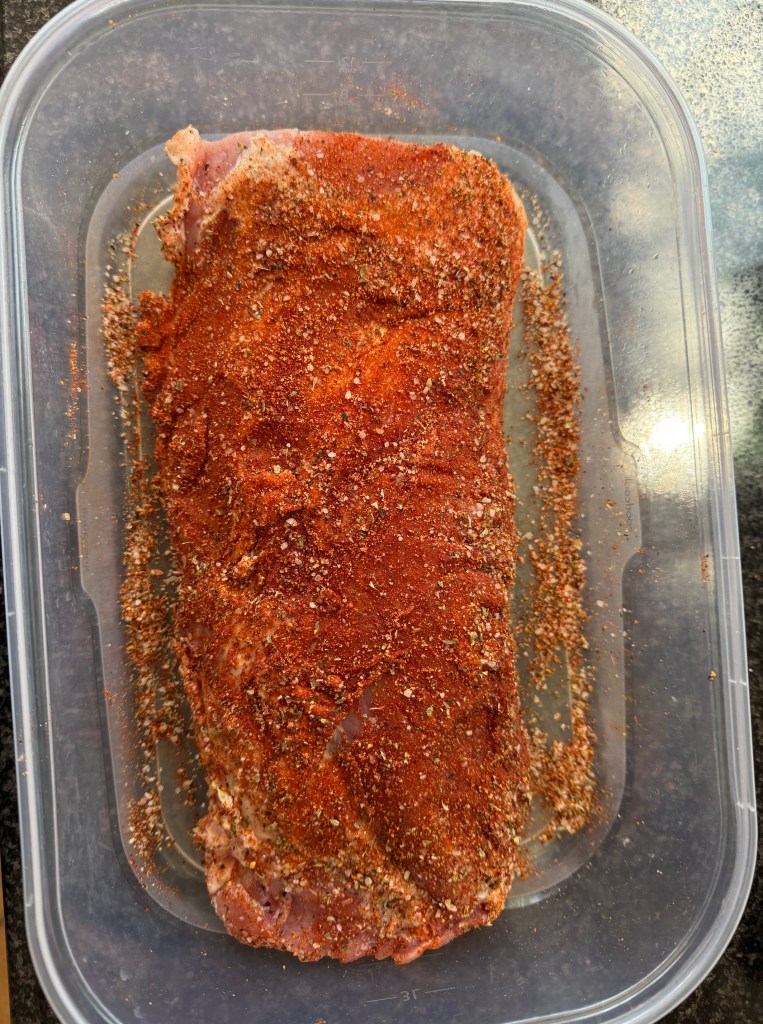
Step 1: Apply rub to the roast
(Boy, it’s hard to say that one without sounding inappropriate.) I like to take the roast out of the fridge and do the prep 1-2 hours before cooking to let it warm up to near room temperature.
Step 2: Brown the roast
Get out a cast iron pot and get it really hot (near smoking). Film it with a good cooking oil; I’ve been using avocado oil lately.
Brown the roast on all sides. If it starts to burn on the bottom, a little more oil in the pot will help. BUT…. YOU WANT THAT STUFF STUCK TO THE BOTTOM, EVEN IF IT LOOKS LIKE ASPHALT! Don’t cook at too low a temp or you will not get that brown goop and all of its flavor.
(Sidenote: You may be asking “why did I not take a picture of the browned roast?” That’s because you’re bright and well-tuned to professional recipes. Me, however, I’m not that bright.)
Step 3: Sauté the veggies
Remove the roast. Put in the onions with oil if needed. Reduce the heat to medium-ish; enough to allow the onions to soften but not to really brown them.
Once they’re getting pretty soft, add the garlic and sauté for a minute or two. Then add in the tomato paste and mix it in; I don’t tend to cook the tomato paste much.
Step 3: Braise the Roast
First, put in a bit of the wine and use a spatula to make sure that anything on the bottom has been loosened up. It’ll turn a pretty dark brown.
Put back the roast and the herbs. Note, I have fresh herbs in the garden, so I tie these up. If nothing else, you can add more dried oregano (or similar), maybe a few bay leaves, something like that.
Add in the red wine. You really don’t want a lot of wine here – just enough to allow the roast to braise and to make a sauce. Another Note – I don’t add acid (vinegar, citrus etc.); I let the wine do that. If you want to add it, by all means do. One way is to hold back some of the wine in braising and add it close to the end.
Cover the pot and reduce the heat to a bare simmer. A lot of recipes like to put the dutch oven into a 325 oven, but I prefer the stovetop.
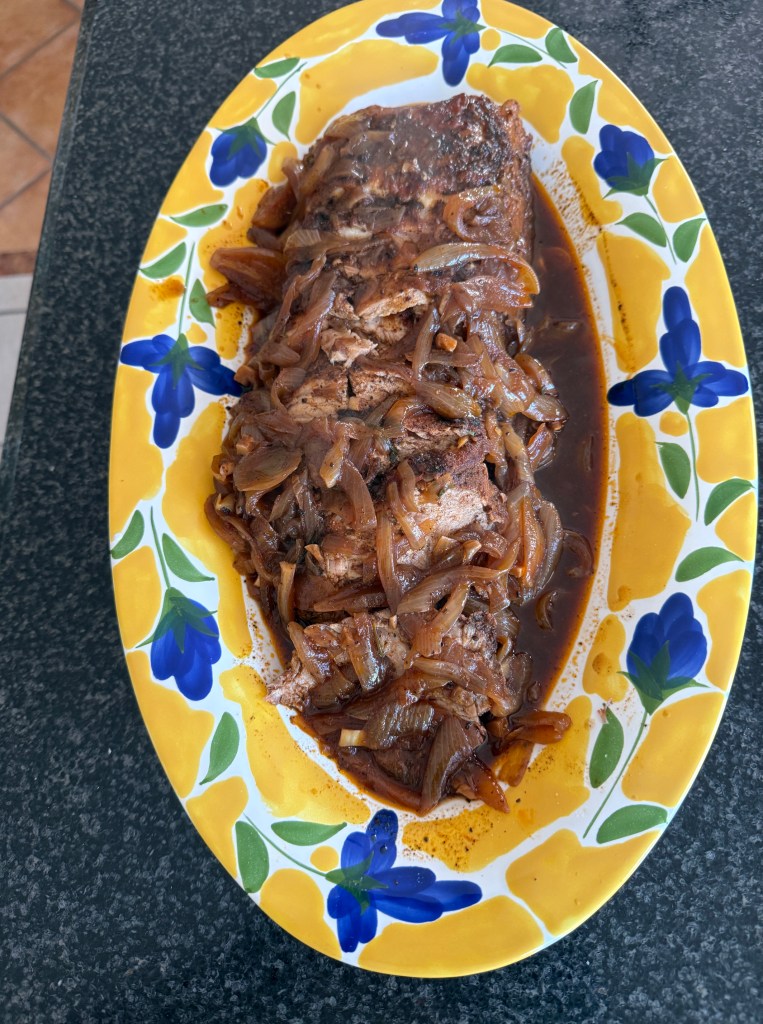
Turn the roast once, about an hour later. It will take about 2 hours to cook to a 155-160 internal temperature.
You can cut and serve this immediately. I don’t see a need to rest the meat. If you want to thicken the sauce, feel free to do so with a beurre manie, cornstarch or whatever. Or reduce the liquid a bit.
Variations
Chicken – I did this same recipe, but using skin-on chicken thighs (about 6-8 thighs). It’s the same thing with these changes:
- Brown the skin on the chicken thighs to try to get it crisp
- I swapped out one onion for a red bell pepper
- I liked the chile rub instead of sumac.
- When I put the chicken back in the pot, I put it skin side up. I also reduced the wine so it would not cover the chicken.
- It cooks much faster – figure 45 minutes to an hour.
Other thoughts:
- Pork Butt or Pork Tenderloin – I think you could swap for either of these and adjust cooking time.
- Fish – I’d bet this works well with some halibut, but I might use white wine instead, and perhaps some fresh chiles and lemon juice.
- Beef – I’d use a cut like chuck roast; but this starts to resemble Pot Roast, and I have a recipe for that that I would probably prefer.
Hope you enjoy this one!


Leave a Reply